Why Custom T-Shirts in Los Angeles Deserve a Second Look from Local Businesses and Bands
Los Angeles has always been a city of print. From band tees sold at punk shows in the 80s to the branded merch you see on every influencer in Silver Lake, the t-shirt remains the most democratic canvas we have. But here is the thing: not every shirt you see was made the same way. Behind the glossy Instagram ads and the overnight turnaround promises, there is a real difference in how a shirt gets printed, who prints it, and whether the final product actually holds up after a few washes. If you are a small business owner, a musician, or someone running a brand that actually needs to hand something to a customer, you need to know how to separate good work from the kind that barely lasts a season.
I have been on both sides of this equation. I managed merch for a touring band for years, and later I helped open a small retail pop-up that relied heavily on printed goods. In both cases, the difference between a shirt that sold out and a shirt that sat on a shelf came down to one thing: the print quality and the people behind it. That is why when people ask me where to start with custom t-shirts Los Angeles, I always tell them to look at the shop, not just the price list. You want a shop that treats your design like their own, not a shop that runs your order through a one-size-fits-all template and hopes for the best.
The market in LA is crowded. You can find a dozen screen printers within a five-mile radius of downtown alone. But the ones that stick around, the ones that earn real loyalty from local businesses, are almost always family-owned operations that have been doing this long enough to understand the little things. Things like how a certain ink behaves on a dark shirt, or why a particular art file needs a halftone adjustment before it will press cleanly. That kind of knowledge does not come from a manual. It comes from experience, from screwing up and fixing it, and from caring enough to get the details right.
Screen Printing vs. DTF vs. Embroidery: Which One Actually Works for You?
Before you even pick a shop, you need to decide what kind of printing makes sense for your project. This is where most people get tripped up. They see a low price for direct-to-film transfers and think it is the same as screen printing. It is not. Each method has its own strengths, and picking the wrong one can cost you time and money.
Screen printing is still the gold standard for most bulk orders. It gives you that thick, durable ink layer that feels like part of the fabric. If you are ordering fifty or more shirts with a simple two-color logo, screen printing is almost always your best bet. The setup cost is higher upfront, but the per-shirt cost drops fast, and the result lasts longer than almost any other method. The downside is that it does not handle highly detailed, photographic designs very well. If your artwork has gradients or tiny text, screen printing can get tricky.

Direct-to-film transfers, or DTF, have become really popular over the last few years because they let you print full-color designs without the setup cost of screens. The print comes out on a film and then gets heat-pressed onto the shirt. It is great for small runs, one-offs, or designs that have a lot of color. But the trade-off is durability. A DTF print can crack or peel faster than screen printing, especially if the shirt is washed in hot water or dried on high heat. For a one-time event shirt, that might be fine. For a retail product you expect someone to wear for years, it is something to think about carefully.
Embroidery is a whole different animal. It works best on hats, polos, and jackets. For t-shirts, embroidery can look really sharp on a small chest logo, but it does not work well for large designs or fine detail. The thread physically punches through the fabric, so the backing can feel stiff on light tees. I have seen brands use embroidery on t-shirts as a premium option, and it can work, but only if the design is simple and the fabric is sturdy enough to handle the stitches.
What a Good Print Shop Does That a Cheap One Doesn't
There is a lot of talk about turnaround time and price per shirt, but the real value of a good shop shows up in the prepress phase. That is the work that happens before a single shirt gets printed. A professional shop will look at your art file and tell you if something needs to change. They might adjust the colors to match the shirt fabric, or they might suggest reducing the number of colors to keep the cost down without sacrificing the look. That kind of advice saves you from ordering a hundred shirts that look muddy or misaligned.
I have had shops that just take your file, run it through a rip software, and print whatever comes out. That is fine if you have a perfect file and you know exactly what you want. But most people do not. Most people have a logo on a napkin, or a screenshot of a design they like, or a rough idea that needs someone to turn it into a real print-ready file. That is where a shop that offers free design help makes a huge difference. It is not just a nice add-on. It is the difference between a shirt that looks amateur and one that looks like it came from a real brand.
This is also where the phrase custom t-shirts Los Angeles customtsprinting comes into play. When you work with a shop that takes the time to understand your vision, the result is not just a shirt. It is a piece of merchandise that represents your business or your band the way you want it to. That kind of partnership matters, especially if you plan to order more than once. Consistency across runs is something that separates good shops from great ones.
Why Local Production Still Matters in 2025
It is tempting to order everything online from a giant print-on-demand service. The interfaces are clean, the shipping is fast, and you do not have to talk to anyone. But there is a hidden cost to that convenience. When you order from a national service, you are one order among thousands. Your design gets printed on whatever blank shirt they have in stock that week, and the color might be slightly different from your last order. If something goes wrong, you talk to a chatbot or an email ticket system.

Local production gives you control. You can walk into the shop, feel the fabric samples, and see a proof before the whole run gets printed. You can ask questions and get answers from someone who actually knows the equipment. That matters more than most people realize, especially if you are ordering for an event with a hard deadline or a product launch where the shirts are the main attraction. Custom Shirt Printing, for instance, has built its reputation on being that kind of shop. They keep everything in-house, which means they control the quality from start to finish. That is rare, and it is worth paying a little more for.
Practical Tips for Your First Order
If you are new to ordering custom shirts, here are three things that will save you headaches:
- Order a single sample before you commit to a bulk run. Even if the shop has a minimum order quantity, ask if you can buy one test shirt first. It costs a few dollars, and it can save you from ordering fifty shirts that fit wrong or look different than you expected.
- Ask about the shirt brand. Not all blanks are the same. A Gildan 5000 fits very differently from a Bella Canvas 3001. If you want a softer, more fitted shirt, say so. If you want a heavier, more durable shirt for workwear, say that too. A good shop will help you pick the right blank for your audience.
- Check the artwork requirements early. Most shops need a vector file or a high-resolution PNG. If your logo is a screenshot from your website, it might not print cleanly. Give yourself time to get the file right before you place the order.
I have made every mistake on that list. I have ordered shirts that shrunk two sizes after one wash. I have ordered prints that looked perfect on screen but came out with muddy colors because the art file was too low resolution. Every time, it was because I rushed the process or picked a shop based on price alone. The shops that took the time to walk me through the options, the ones that asked questions about my fabric choice and my design intent, those are the shops that produced shirts I was proud to sell.
Building a Long-Term Relationship With Your Printer
The best advice I can give you is to find a shop that feels like a partner, not a vendor. That might sound like a cliche, but it is true in practice. When you have a go-to shop that knows your brand, your colors, and your preferred shirt blanks, every reorder gets faster and more accurate. You stop worrying about whether the next batch will match the last one. You can focus on selling the shirts instead of managing the production.
Custom Shirt Printing operates that way. They treat repeat customers like they are part of the family, which makes sense for a family-owned shop. They remember your preferences and they catch issues before they become problems. That is the kind of service that keeps local businesses coming back year after year. And when you consider how many options there are for custom t-shirts Los Angeles, that consistency is what separates a one-time transaction from a lasting relationship.
For bands, local shops also offer something that national printers cannot: the ability to do small, urgent runs. A show gets booked last minute, you need shirts in three days, and the big online services cannot do that without overnight shipping fees that cost more than the shirts themselves. A local shop that runs its own presses can often squeeze you in if you talk to them directly. That kind of flexibility is gold when you are operating on a musician's timeline.
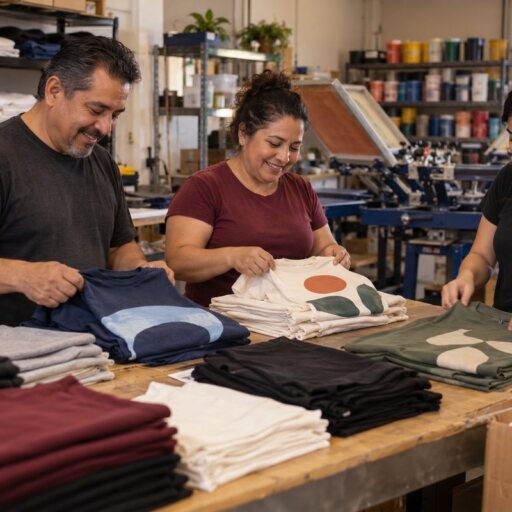
At the end of the day, a custom t-shirt is just a shirt. But the right one, made with care and printed by people who know their craft, can become a piece of your brand that people actually want to wear. That is the goal. That is what makes all the decisions about ink, fabric, and print method worth thinking through. If you take the time to choose wisely, and if you find a shop that treats your work with respect, you will end up with shirts that sell themselves.
And when that happens, when you see someone walking down Sunset wearing your design, you will know it was worth every bit of effort. That is the real payoff. That is why local print shops like Custom Shirt Printing still matter. Because the shirt you hold in your hand is only as good as the work that went into it.
 Facebook
 Instagram
Ends · CUSTOMTSHIRTSLOSANGELESFOCUS